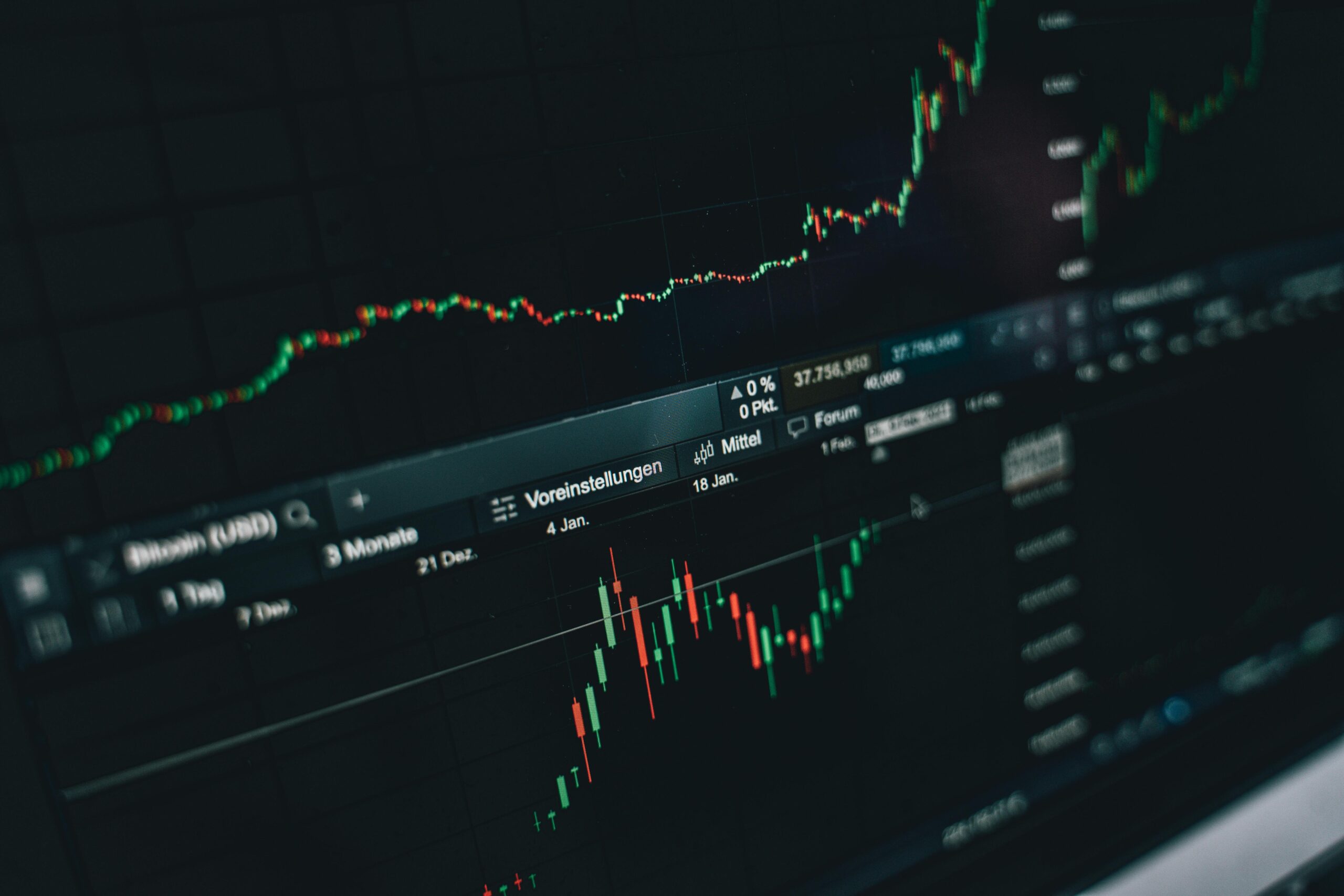
Throughout human history, the desire to predict the future has driven innovation, shaped civilizations, and transformed how we understand our world and possibilities.

🔮 The Ancient Roots of Predictive Thinking
Long before algorithms and data science, ancient civilizations developed sophisticated methods to anticipate future events. The Babylonians meticulously tracked celestial patterns, creating detailed astronomical records that allowed them to predict eclipses with remarkable accuracy. These early astronomers understood that patterns in nature often repeated themselves, establishing the foundational principle of predictive thinking: the past holds clues to the future.
In ancient China, the I Ching or Book of Changes offered a systematic approach to divination that combined philosophical wisdom with pattern recognition. Oracle bones from the Shang Dynasty reveal elaborate systems of interpretation, where priests would analyze cracks in heated bones to forecast everything from harvest yields to military outcomes. While these methods may seem mystical to modern observers, they represented humanity’s first attempts at structured predictive reasoning.
Greek philosophers took prediction in a more analytical direction. Thales of Miletus famously predicted a solar eclipse in 585 BCE, demonstrating that observation and mathematical reasoning could unveil future events. Aristotle later developed logical frameworks for understanding causation and probability, laying intellectual groundwork that would influence predictive thinking for millennia.
📊 The Mathematical Revolution in Forecasting
The Renaissance marked a turning point when prediction began its transformation from art to science. The development of probability theory in the 17th century by mathematicians like Blaise Pascal and Pierre de Fermat created tools for quantifying uncertainty. Suddenly, predicting outcomes wasn’t just about intuition or divine intervention—it could be calculated.
The insurance industry emerged as one of the first practical applications of predictive mathematics. Edward Lloyd’s coffeehouse in London became the birthplace of modern actuarial science, where merchants used statistical data about shipping routes and weather patterns to assess risk and set premiums. This commercial application demonstrated that predictive thinking had tangible economic value.
The 19th century brought exponential growth in predictive capabilities. Meteorology evolved from folklore into a data-driven discipline. Admiral Robert FitzRoy established the first weather forecasting service in Britain, collecting observations from multiple stations and using telegraph technology to share information rapidly. Though his methods were primitive by today’s standards, they proved that coordinated data collection could improve prediction accuracy.
Statistical Foundations That Changed Everything
The work of statisticians like Francis Galton and Karl Pearson introduced correlation and regression analysis, powerful tools for identifying relationships between variables. These mathematical techniques allowed researchers to move beyond simple observation toward understanding how multiple factors interact to produce outcomes. The bell curve, standard deviation, and confidence intervals became the language of prediction.
During World War II, predictive thinking took on unprecedented urgency. Operations research emerged as a discipline, applying mathematical modeling to complex strategic decisions. British codebreakers at Bletchley Park used statistical analysis to crack German encryption, while American strategists employed game theory to anticipate enemy moves. War accelerated predictive innovation in ways that would later transform civilian life.
💻 The Digital Age and Computational Prediction
The invention of computers fundamentally altered predictive capabilities. What once took teams of mathematicians weeks to calculate could now be computed in seconds. Early mainframe computers tackled weather modeling, economic forecasting, and demographic projections with unprecedented scale and complexity.
The 1950s and 1960s saw the birth of artificial intelligence, with researchers dreaming of machines that could learn patterns and make predictions autonomously. Herbert Simon and Allen Newell created programs that could solve logic problems, while Arthur Samuel developed a checkers-playing algorithm that improved through experience—an early form of machine learning.
Database technology revolutionized predictive thinking by making vast amounts of historical data accessible for analysis. Organizations could now examine millions of transactions, customer behaviors, and operational metrics to identify patterns invisible to human observation. The data warehouse became the foundation for modern predictive analytics.
Machine Learning Transforms the Landscape 🤖
The late 20th century witnessed machine learning evolve from academic curiosity to practical tool. Neural networks, inspired by biological brain structures, could recognize complex patterns in data without explicit programming. Credit card companies deployed these systems to detect fraudulent transactions, while retailers used them to forecast inventory needs.
The explosion of internet data in the 1990s and 2000s provided unprecedented training material for predictive models. Google’s PageRank algorithm predicted which websites users would find most valuable. Amazon’s recommendation engine anticipated customer preferences with uncanny accuracy. Netflix could suggest movies you’d enjoy before you knew you wanted to watch them.
Social media platforms took prediction to new levels, analyzing billions of interactions to forecast user behavior, optimize content delivery, and target advertisements with laser precision. These systems learned not just from individual behavior but from collective patterns across entire populations, identifying trends and preferences at massive scale.
🧬 Predictive Thinking in Modern Science and Medicine
Genomics represents one of the most profound applications of modern predictive thinking. The ability to sequence DNA and correlate genetic variations with health outcomes has transformed medicine from reactive treatment to proactive prevention. Researchers can now assess risk factors for conditions like cancer, heart disease, and Alzheimer’s long before symptoms appear.
Personalized medicine uses predictive models to determine which treatments will work best for individual patients based on their genetic profile, lifestyle factors, and medical history. Oncologists employ algorithms that analyze tumor characteristics to recommend therapy combinations with the highest probability of success. This precision approach improves outcomes while reducing unnecessary treatments.
Climate science relies heavily on sophisticated predictive models that simulate Earth’s complex systems. By incorporating data on ocean currents, atmospheric composition, solar radiation, and countless other variables, scientists project future climate scenarios. While uncertainty remains inherent in these predictions, models have grown increasingly accurate at forecasting temperature trends, precipitation patterns, and extreme weather events.
The Pandemic Prediction Challenge
The COVID-19 pandemic showcased both the power and limitations of predictive thinking. Epidemiological models helped governments understand potential infection trajectories and evaluate intervention strategies. However, the crisis also revealed how unpredictable human behavior, political decisions, and viral mutations could disrupt even sophisticated forecasts.
Real-time data integration became crucial during the pandemic. Health authorities used mobility data, testing results, and hospitalization rates to adjust predictions continuously. This adaptive approach represented an evolution beyond static forecasts toward dynamic prediction systems that update as new information emerges.
🏢 Predictive Analytics in Business and Economics
Modern businesses treat prediction as competitive necessity rather than luxury. Customer churn models identify which clients are likely to leave, allowing companies to intervene with retention offers. Demand forecasting optimizes supply chains, reducing waste while ensuring products are available when needed. Price optimization algorithms adjust pricing dynamically based on predicted demand elasticity.
Financial markets have become laboratories for predictive innovation. High-frequency trading systems execute millions of transactions based on microsecond predictions of price movements. Quantitative hedge funds employ machine learning models trained on alternative data sources—satellite images of parking lots, sentiment analysis of social media, shipping container traffic—to gain predictive edges.
Human resources departments use predictive analytics to identify promising job candidates, forecast employee turnover, and optimize workforce planning. While these applications raise important ethical questions about bias and privacy, they demonstrate how thoroughly predictive thinking has penetrated organizational decision-making.
Economic Forecasting’s Complex Evolution
Economic prediction remains notoriously challenging despite sophisticated models. Central banks employ teams of economists using complex systems to forecast inflation, employment, and growth. Yet major events like the 2008 financial crisis often catch forecasters by surprise, revealing the limits of prediction when faced with structural changes or unprecedented circumstances.
Behavioral economics has enriched economic prediction by incorporating psychological insights into models. Understanding cognitive biases, emotional influences, and social dynamics improves forecasts of consumer behavior, investment decisions, and market reactions. This interdisciplinary approach acknowledges that prediction must account for human irrationality as well as rational calculation.
🌐 The Internet of Things and Predictive Maintenance
The proliferation of connected sensors has created entirely new prediction possibilities. Industrial equipment fitted with IoT devices continuously streams data about temperature, vibration, pressure, and performance. Machine learning algorithms analyze these signals to predict failures before they occur, enabling preventive maintenance that reduces downtime and costs.
Smart cities use sensor networks to predict traffic congestion, optimize energy distribution, and anticipate infrastructure maintenance needs. These systems learn from patterns in how people move through urban environments, adjusting traffic signals, public transit schedules, and resource allocation in real-time.
In agriculture, precision farming combines satellite imagery, soil sensors, and weather data to predict optimal planting times, irrigation needs, and harvest yields. Farmers can now make decisions based on hyper-local forecasts tailored to specific fields rather than relying on general regional predictions.
🔬 Deep Learning and the Current Frontier
Deep learning represents the current cutting edge of predictive capability. These neural networks with multiple layers can extract hierarchical patterns from raw data, achieving superhuman performance in tasks like image recognition, natural language processing, and game playing. AlphaGo’s victory over world champion Go players demonstrated that machines could now master domains requiring intuition and long-term strategic thinking.
Transformer models like GPT have revolutionized language prediction, generating coherent text by predicting the most probable next words based on vast training data. These systems can complete sentences, answer questions, write essays, and engage in conversations by continuously forecasting linguistic patterns.
Computer vision systems predict not just what objects appear in images but also anticipate movement and intention. Autonomous vehicles must constantly predict what pedestrians, other vehicles, and environmental factors will do next. The safety of self-driving technology depends entirely on the accuracy of these split-second predictions.
Limitations and the Prediction Horizon
Despite remarkable advances, fundamental limitations constrain predictive thinking. Chaos theory demonstrates that some systems are inherently unpredictable beyond short time horizons—small variations in initial conditions produce wildly divergent outcomes. Weather forecasts remain unreliable beyond about ten days for this reason.
The problem of overfitting reminds us that models trained too closely on historical data may fail when conditions change. Predictions work best when the future resembles the past, but transformative events—technological breakthroughs, social movements, pandemics—can invalidate even sophisticated forecasts.
Prediction also faces an observer effect: forecasts can influence the behavior they attempt to predict. Economic predictions affect investor decisions, which alter market outcomes. Political polls shape voter perceptions and campaign strategies. This feedback loop complicates the predictive enterprise in social domains.
🎯 Ethical Dimensions of Predictive Power
As predictive capabilities grow more powerful, ethical concerns intensify. Criminal justice systems increasingly use risk assessment algorithms to predict recidivism and inform sentencing decisions. Critics warn these tools may perpetuate racial bias by learning from historical data that reflects systemic discrimination.
Privacy concerns arise when predictions become too accurate. If algorithms can reliably predict your health conditions, purchasing decisions, or political views from digital footprints, what rights do you have to that predictive information? Who should control predictive insights about your future behavior?
The insurance industry faces ethical dilemmas as predictive models grow more sophisticated. Should people pay different premiums based on genetic predispositions they cannot control? How do we balance actuarial accuracy against principles of solidarity and equal treatment?
🚀 The Future of Prediction Itself
Quantum computing promises to revolutionize prediction by solving optimization problems beyond classical computers’ reach. Quantum algorithms could model molecular interactions for drug discovery, optimize complex logistics networks, and simulate financial systems with unprecedented accuracy.
Brain-computer interfaces may eventually allow direct integration between human intuition and artificial prediction systems. Rather than receiving predictions from external tools, we might augment our cognitive abilities with real-time predictive support, blending human judgment with machine analysis.
Collective intelligence platforms could harness the wisdom of crowds more effectively, combining diverse human predictions with algorithmic analysis. Prediction markets have shown that aggregating many individual forecasts often outperforms expert opinion—future systems may systematize this advantage.
Embracing Uncertainty While Pursuing Foresight ✨
The paradox of predictive thinking is that perfect prediction remains impossible while continuous improvement proves achievable. We will never eliminate uncertainty completely, yet each generation develops better tools for illuminating the darkness ahead.
The journey from ancient oracle bones to artificial intelligence reflects humanity’s persistent drive to reduce uncertainty and shape our destiny. Predictive thinking has evolved from mystical practices to mathematical sciences to computational systems, each stage building on previous insights while opening new possibilities.
Understanding this historical arc helps us appreciate both the power and limits of prediction. We’ve gained remarkable forecasting abilities yet must remain humble about inherent uncertainties. The most sophisticated models cannot predict singular transformative events or account for human creativity and choice.
As we continue pushing the boundaries of predictive capability, success will require balancing technical advancement with wisdom about what we can and cannot know. The future remains partially veiled regardless of our tools—and perhaps that uncertainty itself drives the innovation and adaptation that make our species resilient.
The fascinating journey of predictive thinking teaches us that the quest to understand tomorrow shapes how we live today. By developing better forecasts, we create opportunities to make wiser choices, prepare for challenges, and unlock potentials that would otherwise remain hidden. The transformation continues, limited only by imagination and the fundamental mysteries that make life unpredictable and worth living.